

Paperwork might not be the most exciting part of farming - but when it comes to waste, it’s essential. One of the key documents every farm should be familiar with is the Waste Transfer Note, or WTN.
If you’ve ever had your plastic collected or your drums taken away, you’ve likely signed one. But what exactly is it, and why does it matter so much?
Here’s what you need to know.
What Is a Waste Transfer Note?
A Waste Transfer Note is a legal document that records the transfer of non-hazardous waste from one person or business to another.
In plain terms: it proves that you’ve passed your waste on to someone who’s authorised to take it - and that you’ve done it properly.
Every time waste leaves your farm, you should have a WTN. It’s your evidence that the waste is being handled responsibly - and it protects you if questions are ever asked.
Why It Matters
It keeps you compliant
The Environment Agency expects farms to show how their waste is being managed. If you can’t produce a WTN, you may be seen as disposing of waste illegally - even if you thought you were doing the right thing.
It protects your business
In the event of an inspection or audit, having your paperwork in order can make all the difference. A missing WTN can lead to warnings, fines, or even loss of scheme eligibility.
It’s your paper trail
If the waste ends up somewhere it shouldn’t, you want to prove you handed it over to a registered contractor - not dumped it yourself. A signed WTN covers your back.
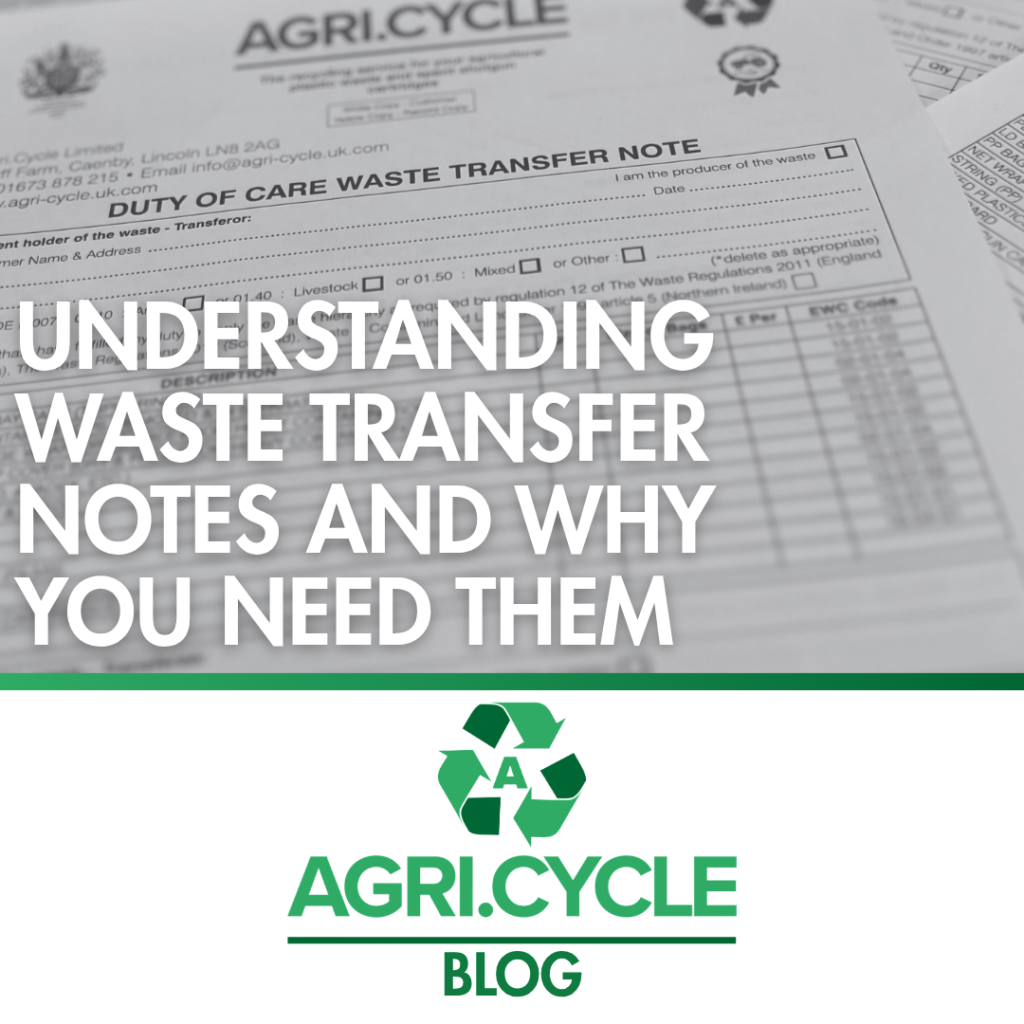
What’s on a WTN?
A proper WTN includes:
- The date of transfer
- Description of the waste (e.g. “mixed farm plastic,” “fertiliser bags”)
- Quantity of waste
- The names and addresses of both parties
- Registration number of the waste carrier
- SIC code and waste code (standard industry codes for the waste type)
It sounds like a lot, but don’t worry - if you use Agri.Cycle, we sort all of this out for you.
How Long Do You Need to Keep It?
Legally, you need to keep WTNs for at least two years - and they must be available to show to inspectors if asked.
We recommend keeping them in both digital and physical form. If you work with Agri.Cycle, we’ll keep records too, just in case anything goes missing on your end.
What About Hazardous Waste?
If your waste is classed as hazardous (for example, old oils, agrochemicals, or contaminated PPE), you’ll need a Hazardous Waste Consignment Note instead. It’s a slightly different form, but it serves the same purpose - to prove your waste was handled properly.
Again, we take care of this for you.
Don’t Get Caught Out
Too many farmers only think about paperwork when an inspection is looming - but by then, it’s often too late.
The good news? Staying compliant is simple when you’ve got the right partner. Agri.Cycle gives you all the correct documentation with every collection, so you’re always covered.
Need help getting your records in order?
Get in touch and we’ll help you get fully set up - with everything from Waste Transfer Notes to compliant storage. One less thing to worry about.